

Quick answer
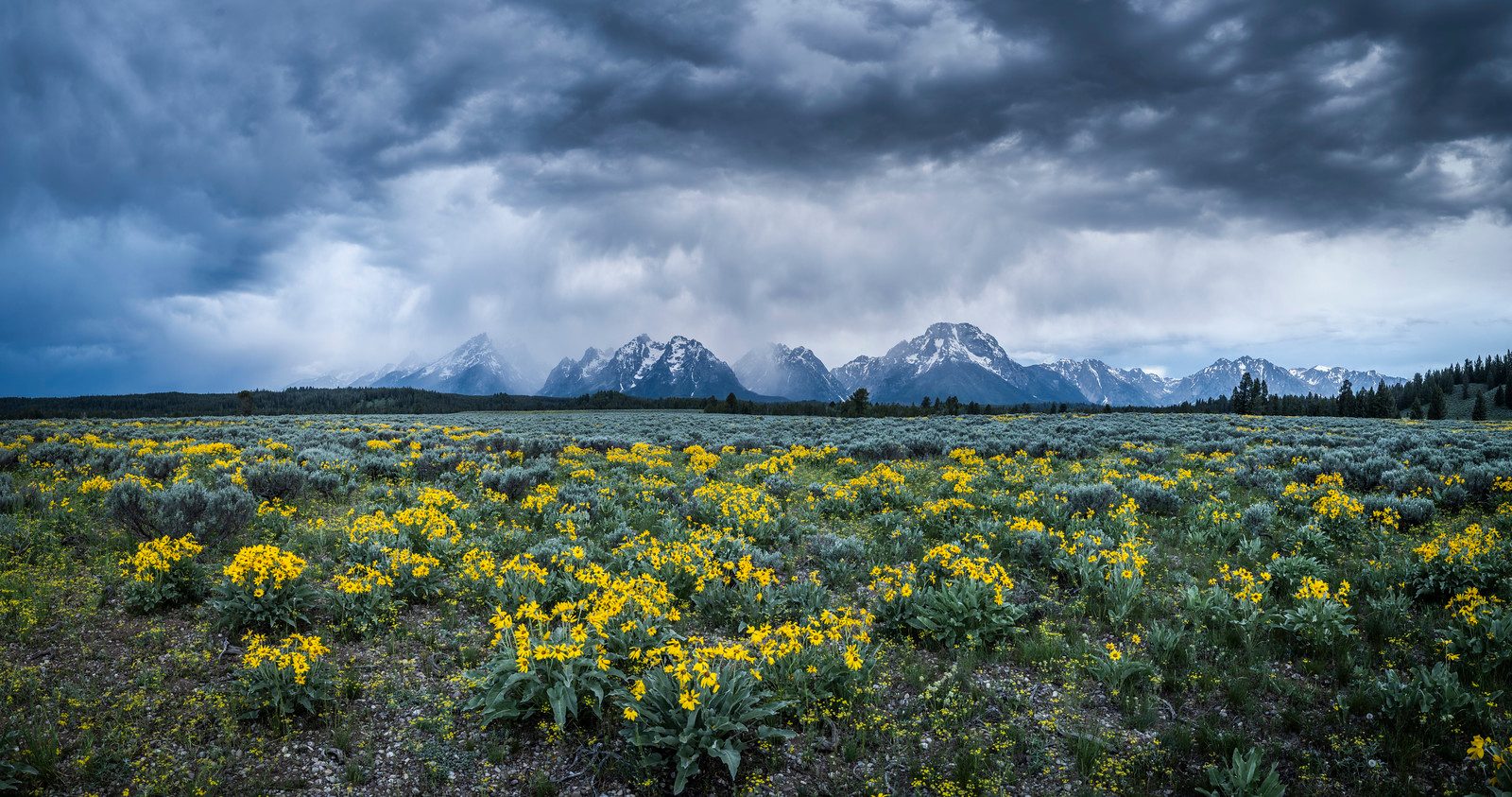
Grand Teton National Park has a cold semi-arid mountain climate with dramatic daily swings — summer days often reach the 70s or 80s Fahrenheit while nights drop to the 30s or 40s, and winter lows regularly fall below zero. Convective afternoon thunderstorms are common from July through September, which is why the park's recommended arrival window of 05:00–08:00 delivers the calmest, clearest conditions.
Snow has fallen in Jackson Hole in every month of the year. That single fact reframes most of what visitors assume about a summer trip: the valley floor sits near 6,800 feet, the Teton Range rises abruptly to 13,775 feet at the Grand Teton summit with no foothills to soften the transition, and air masses forced upward over that wall cool fast. The result is a climate that behaves less like a season and more like a series of hours. Anyone asking what is the weather in grand teton national park is really asking about a diurnal cycle rather than a forecast number. Mornings are the stable part of the day. Cold air pools overnight across the sagebrush flats and along the Snake River, leaving still surfaces on Jenny Lake and Jackson Lake and negligible wind before the sun clears the Gros Ventre Range. That stillness is why balloon operators, wildlife photographers and climbers heading for Cascade Canyon all move in the same early window. By late morning solar heating begins driving convection up the east face of the range; by early afternoon, cumulus towers build over Mount Moran and the Cathedral Group. Between roughly July and September, those towers frequently mature into short, intense thunderstorms with lightning, gusting outflow winds and a sharp temperature drop. They usually clear by evening. Seasonally, the spread is severe. July and August bring the warmest, driest stretch, with daytime highs commonly in the 70s and 80s Fahrenheit and overnight lows in the 30s and 40s — a 40-degree swing is routine. September and October cool quickly and bring the first snow to the higher elevations. Winter is genuinely cold, with sub-zero lows, deep snowpack and long stretches of overcast. Spring is the least predictable stretch of the calendar, mixing meltwater, mud and late storms. Any Grand Teton weather forecast should be read as a ceiling, not a promise. The practical takeaway is scheduling. Weather-sensitive activities — flightseeing, summit attempts, long exposed hikes above treeline — belong in the first hours after sunrise, when conditions across the Wyoming national park landscape are at their most reliable. Understanding what is the weather in grand teton national park means understanding that the sky here has a schedule, and that visitors who work with it lose far fewer days than those who plan around the clock instead.
“The sky here has a schedule, and visitors who work with it lose far fewer days.”
Understanding What Is The Weather In Grand Teton National Park Across Seasons
The period from July through early September offers the most stable weather and full accessibility to high-elevation trails. This window provides the warmest temperatures, with valley highs typically reaching 70°F to 80°F, while minimizing the risk of late-spring or early-autumn snow closures.
Summer (July–August)
High volumeHighs 75°F–80°F, lows 40°F
Ideal for hiking and water activities as snow clears from mountain passes.
Autumn (September–October)
ModerateHighs 50°F–70°F, lows 25°F–35°F
Temperatures drop significantly, and the first winter storms often arrive by late October.
Winter (November–March)
LowHighs 20°F–35°F, lows 0°F–15°F
Heavy snowfall restricts access, though the landscape becomes quiet for snowshoeing and cross-country skiing.
Spring (April–June)
ModerateHighs 40°F–65°F, lows 20°F–35°F
Variable conditions prevail as the snowpack melts and trails remain muddy or snow-covered.
Verdict: For the best balance of moderate temperatures and accessible conditions, visit during the shoulder months of September or early July.
Essential Gear For What Is The Weather In Grand Teton National Park
Grand Teton sits between roughly 6,300 and 13,775 feet, where a calm 40°F dawn can turn into a windy afternoon thunderstorm, so pack for the swing rather than the forecast.
-
Pack a three-layer clothing system — A wicking base, insulating fleece and shell cover the full daily temperature swing.
-
Bring a windproof, waterproof outer shell — Afternoon thunderstorms and valley wind arrive fast and rarely announce themselves.
-
Add gloves, warm hat and buff — Pre-dawn temperatures near Jenny Lake and Jackson Hole often sit close to freezing, even in July.
-
Wear broken-in boots with tread — Trails stay muddy or snow-patched into early summer at higher elevations.
-
Carry sunglasses, SPF 30+ and lip balm — Thin air at this altitude burns skin faster than the mild temperature suggests.
-
Fill two litres of water — Dry mountain air dehydrates you quickly, and refill points are spread out.
-
Stow a headlamp and bear spray — Useful for the 05:00–08:00 arrival window when light is low and wildlife is active.
-
Check the forecast the night before — Conditions differ sharply between the valley floor and the canyons above it.
How To Navigate To The Park Despite What Is The Weather In Grand Teton National Park
Grand Teton National Park is located in northwestern Wyoming, accessible primarily via U.S. Highways 26, 89, and 191. Weather significantly influences road access, particularly with seasonal closures of high-altitude mountain passes and the Teton Park Road, which typically closes to vehicles from November 1 to April 30.
US-191/89/26 to Moose Junction
US-191/89/26 to Moran Entrance
Wyoming Highway 390 to Teton Village
Entrance Fees For When You Visit Based On What Is The Weather In Grand Teton National Park
Entrance fees for Grand Teton National Park remain consistent regardless of the weather conditions or season. These fees are required for park access and support ongoing preservation efforts.
A standard vehicle pays 35 USD for a 7-day pass, though fees vary if you qualify for federal interagency passes.
Operational Hours Regardless Of What Is The Weather In Grand Teton National Park
Grand Teton National Park remains accessible throughout the week. While the park maintains consistent operating hours for general access, individual visitor centers and specific facilities may operate on different schedules.
| Monday | 00:00–23:59 | |
|---|---|---|
| Tuesday | 00:00–23:59 | |
| Wednesday | 00:00–23:59 | |
| Thursday | 00:00–23:59 | |
| Friday | 00:00–23:59 | |
| Saturday | 00:00–23:59 | |
| Sunday | 00:00–23:59 |
Check availability
Grand Teton Weather and Planning FAQ
Everything you need to know about what is the weather in grand teton national park